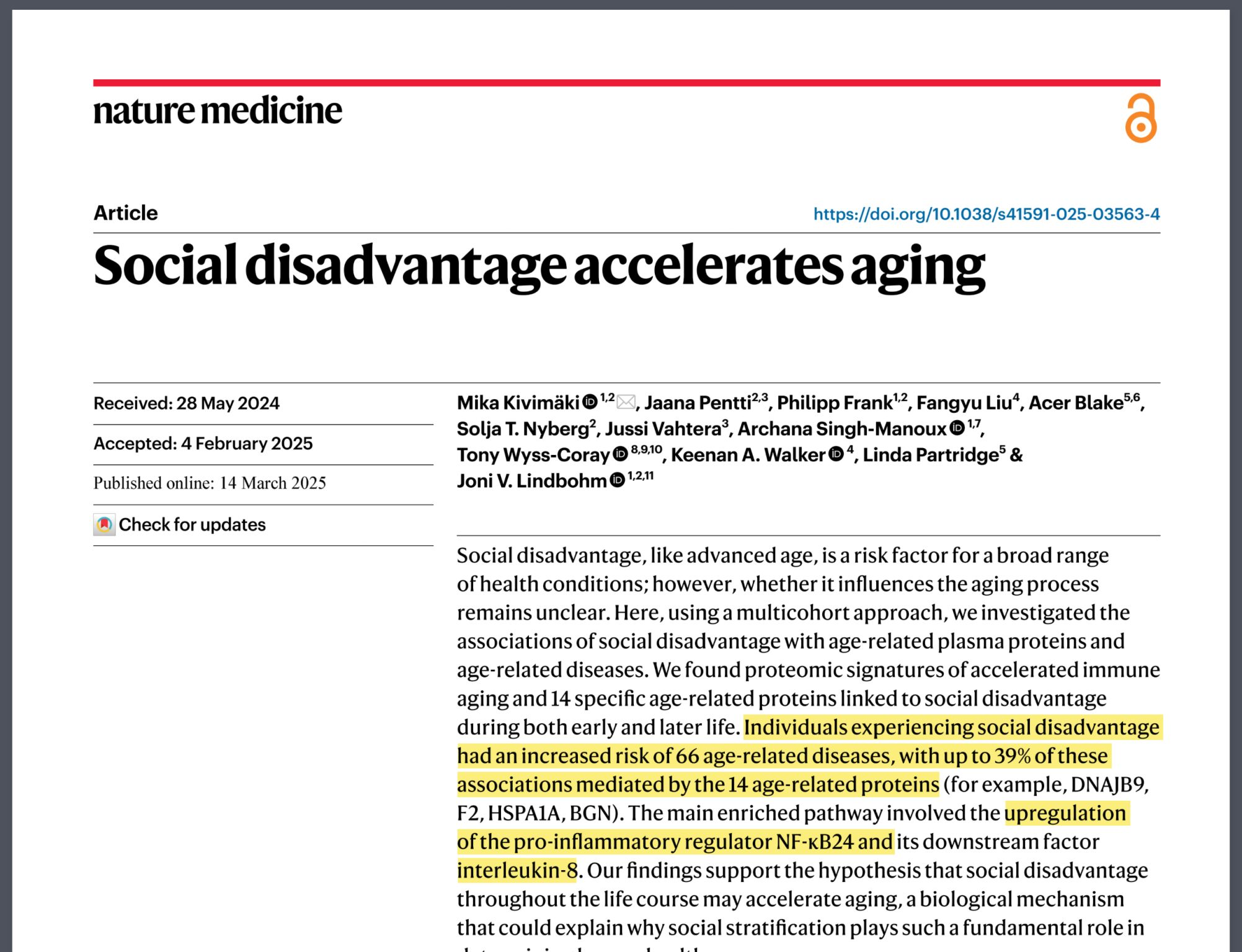
We’ve all heard of “Precision Medicine” — targeting therapies based on your biology. A new paper in Nature Medicine (2025) takes it further.
The study, Social disadvantage accelerates aging, convincingly shows how social factors — education, neighborhood, and income — shape your biology, accelerate aging, and increase your risk for 66 different age-related diseases.
And the most compelling part?
These effects are measurable — through proteins in your blood.
A few stand-out quotes from the study:
📌 “The over-twofold increased risk of type 2 diabetes, liver disease, heart failure, stroke, peripheral artery disease, gout, chronic obstructive pulmonary disease, lung cancer and mesothelioma in individuals with social disadvantage highlights the strong link between social disadvantage and hallmark-related morbidity.”
📌 “An improvement in social standing (that is, from low education to intermediate or high adult SES) was linked to more favorable protein concentrations compared with remaining in a low position.”
📌 “Our protein findings could help identify vulnerable individuals who are most likely to benefit from interventions aimed at reducing social inequalities by targeting these factors.”
As testing and AI get cheaper and more ubiquitous, we’ll soon use biology — not surveys, not insurance claims — to guide social interventions.
PRECISION SOCIAL CARE.
It’s a phrase we don’t use yet… but I think we will very soon.